Fools Mate - TryHackMe
Web Enumeration, Understanding how the application works, Bypassing application logic, Manual Web Exploitation and Critical Thinking are the coverings of this fools-mate room.
Overview
This is a detailed walkthrough of how I captured the flag of Fools-mate room on TryHackMe. The room involved Enumeration, Understanding how the application works, Bypassing application logic, Manual Web Exploitation and Critical Thinking.
Enumeration
I started the engagement with an nmap scan:
nmap -sC -sV -oN initial_scan.txt <target-ip>
The scan revealed two open ports:
- 22 (SSH)
- 80 (HTTP)
Web Application Discovery
I started with basic enumeration. A quick Nmap scan did not reveal anything useful beyond the web service, so I moved on to manual web inspection.
When opening the page in the browser, the application displayed a chess board game.
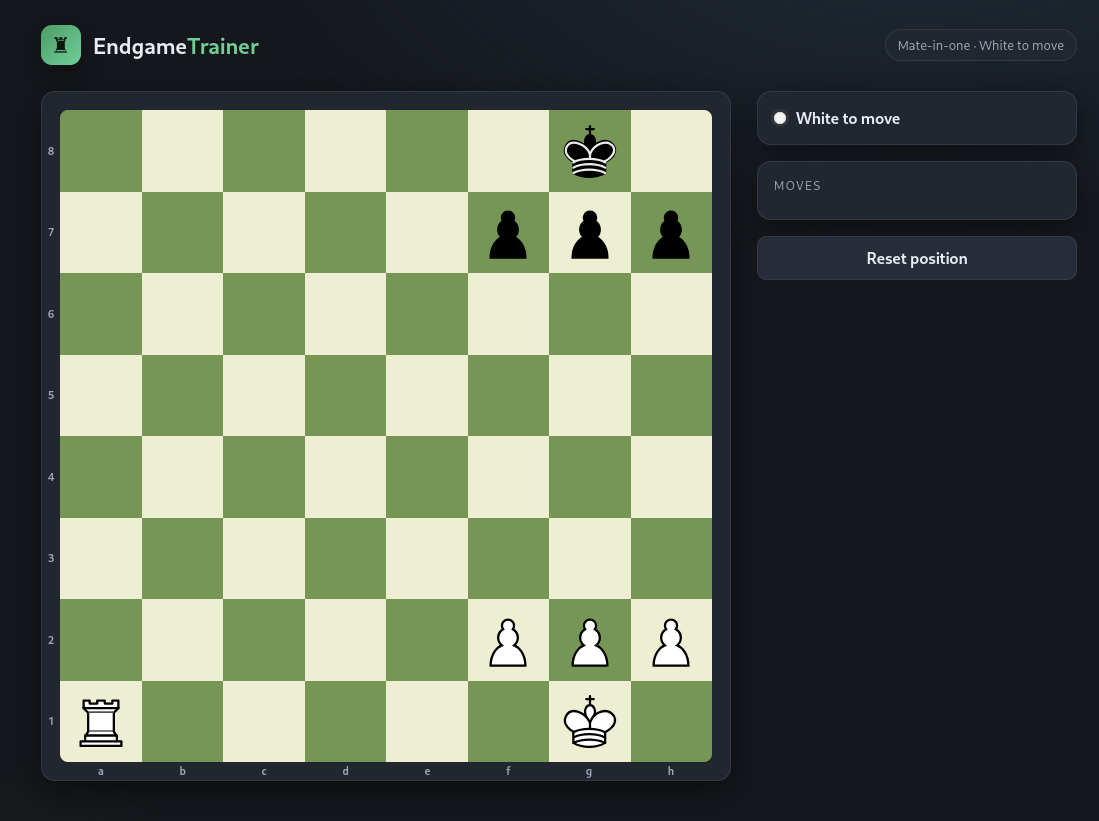
The position was a simple rook endgame puzzle. White had a rook on a1, and the black king was trapped on g8 by its own pawns.
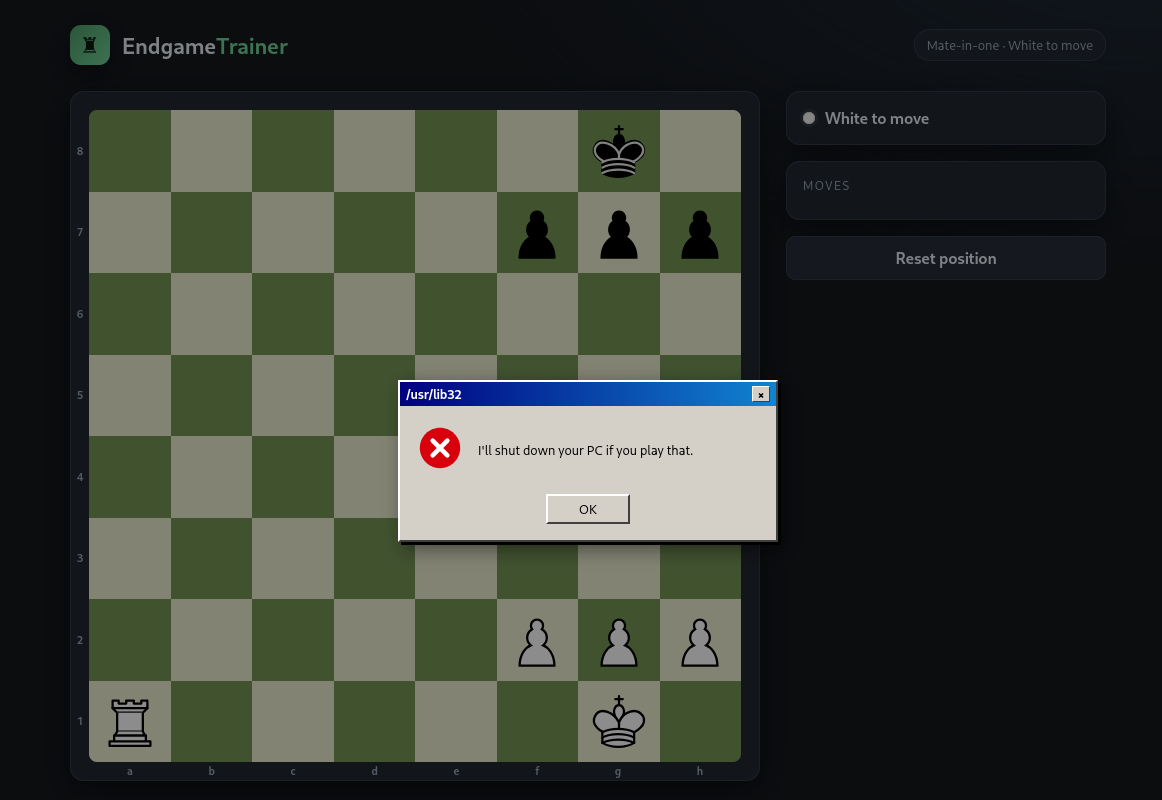
The intended winning move was: from: a1 to: a8
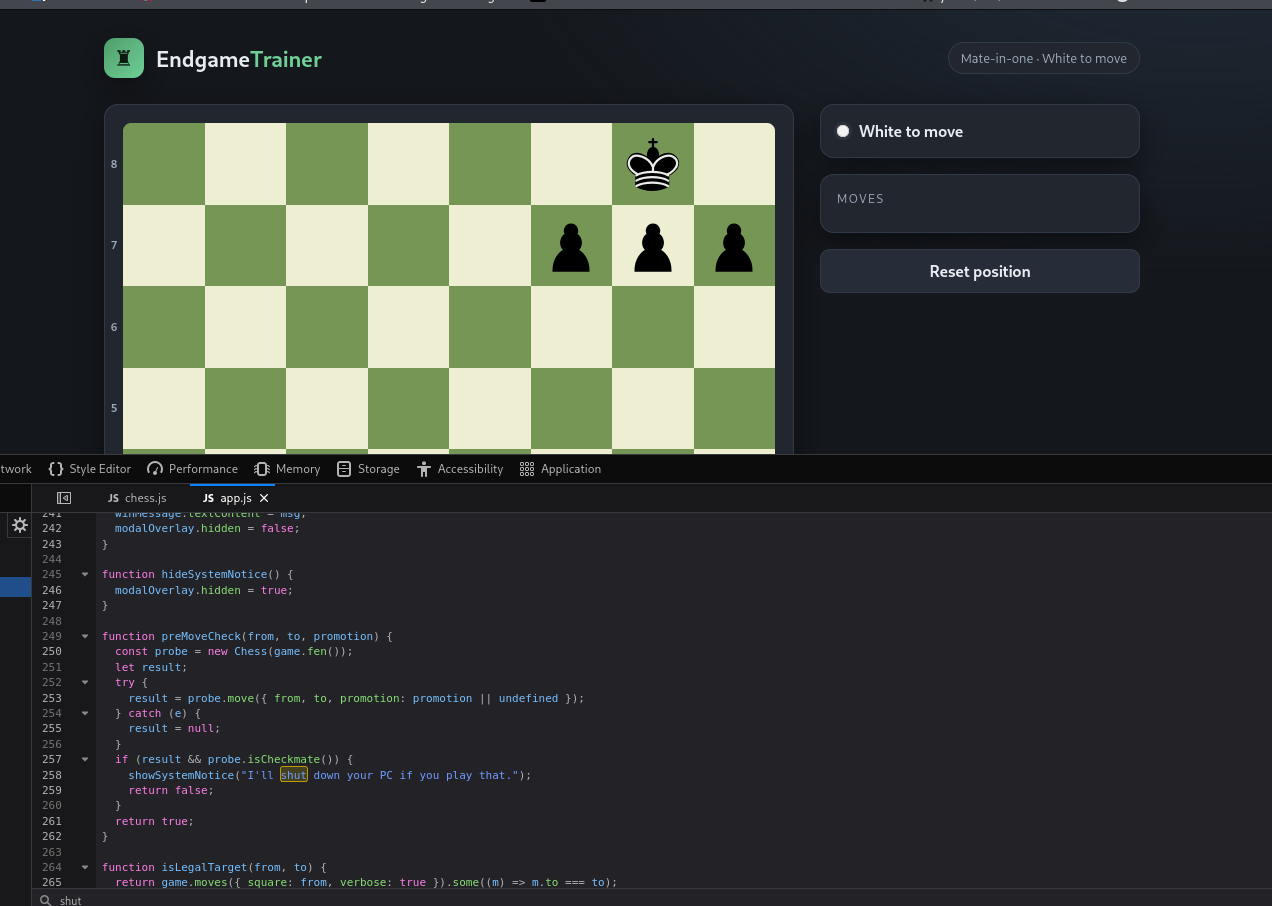
I inspected the page source and JavaScript files. The main frontend logic was loaded from /js/app.js
Then i search for the text shut, i find the function preMoveCheck validating at the frontend.
Exploitation
Continuing through the JavaScript file, I found that moves were submitted to the backend with the api POST api/move.
I open the burpsuite to bypass the javascript validation on the frontend, then i captured the request
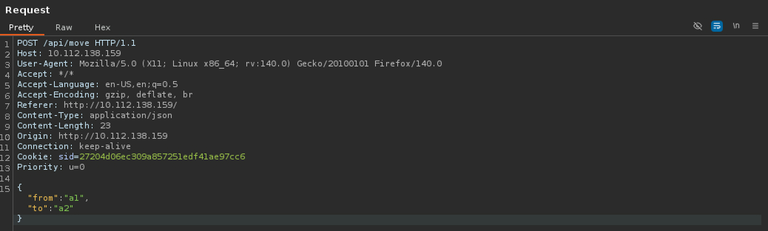
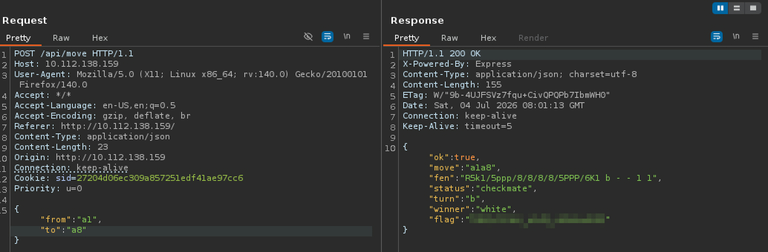
i then modified the json body to from: a1 , to: a8 and forwarded the request, the server responded with the flag without any validation and check.
Tools used:
- Gobuster
- Firefox Developer Tools
- Burp Suite
Summary & Learning Objectives
This room focuses on a typical and basic web application assessment workflow:
Core Topics
1.Enumeration
- Explore the website.
- Identify pages, forms, and hidden functionality.
- Inspect requests and responses.
- Use browser Developer Tools and/or Burp Suite.
2.Understanding how the application works
- Observe how user input is processed.
- Look for filters or restrictions.
- Identify where security checks are performed.
3.Bypassing application logic
- The title “Can you bypass the engine?” is the biggest clue.
- Rather than exploiting an outdated vulnerability, you’ll likely need to bypass a validation or filtering mechanism.
- This teaches logic flaws rather than just CVE exploitation.
4.Manual Web Exploitation
- Modifying HTTP requests
- Changing parameters
- Trying alternative encodings
- Testing edge cases
- Looking for hidden endpoints
- Understanding server responses
5.Critical Thinking
- Observe
- Hypothesize
- Test
- Repeat
Thanks for reading!